40+ Healing Plants in the Bible:
Scripture, Symbolism & Natural Health
From the Garden of Eden to the New Jerusalem — the plants God placed in Scripture carry healing we are only beginning to understand.
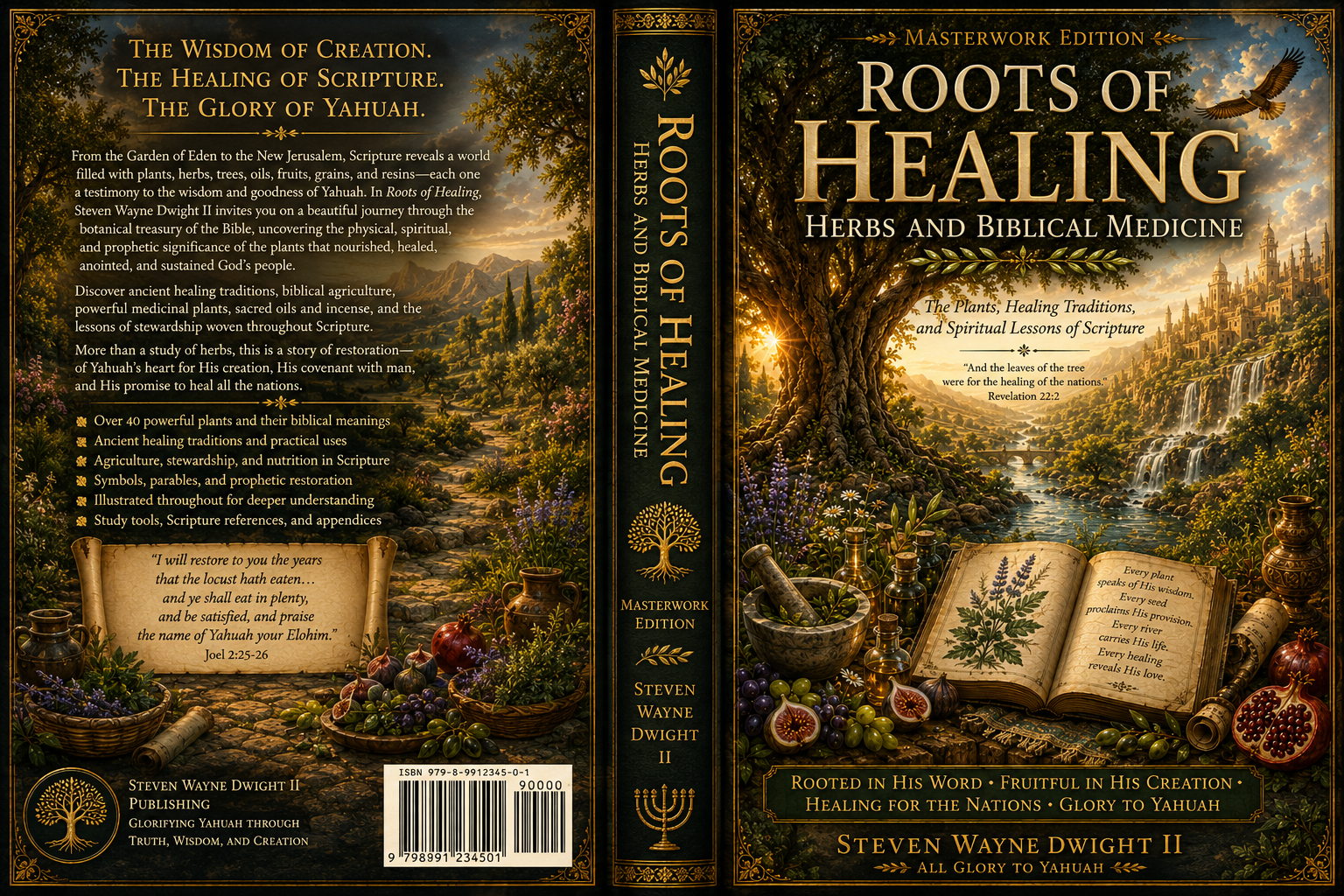
When the Wise Men traveled from the East, they carried three gifts for the newborn King: gold, frankincense, and myrrh. Two of those three were plants. The healers and prophets of Scripture were intimately familiar with the herbs, oils, and botanicals that grew around them — and many of those same plants are still used in natural wellness today.
Roots of Healing explores more than 40 plants mentioned in Scripture, connecting ancient wisdom with modern understanding. This guide walks through the most significant ones: what the Bible says, what modern herbalism confirms, and what spiritual symbolism they carry.
"And the leaves of the tree were for the healing of the nations." — Revelation 22:2
The Biblical Foundation: Where Healing Begins
The Bible opens with a garden — and that garden was full of plants created for a purpose. Genesis 1:29 records God's first instruction to humanity: "I give you every seed-bearing plant on the face of the whole earth and every tree that has seed-bearing fruit — they will be your food." Food as medicine was the original design.
By Genesis 2:8-9, God had already planted a garden "east of Eden" and placed "every tree that is pleasing to the eye and good for food" there — including, we are told, the Tree of Life and the Tree of Knowledge of Good and Evil. Healing was woven into creation from the very beginning.
The book of Exodus records God's recipe for holy anointing oil (Exodus 30:22-25) using cassia, cinnamon, calamus, myrrh, and olive oil — a blend used to ordain priests and sanctify sacred spaces. The herbs weren't decorative; they were functional and holy.
"The leaves of the tree were for the healing of the nations."
— Revelation 22:2
The Plants of Scripture: 40+ Herbs, Their Uses, and Their Meaning
The following are among the most prominent healing plants woven through Scripture — from the oils used in worship to the remedies passed down through generations.
Frankincense
Matthew 2:11 · Song of Songs 4:6, 14 · Leviticus 2:1-2
A resin from Boswellia trees native to the Arabian Peninsula and Horn of Africa. Used in worship as a sweet-smelling incense offering. Contains boswellic acids studied for anti-inflammatory properties. Symbolically associated with prayer, divinity, and the Presence of God. One of the three gifts of the Magi — offered to Christ at birth.
Myrrh
Matthew 2:11 · Mark 15:23 · Song of Songs 5:5 · Exodus 30:23
A resin from Commiphora myrrha, used in biblical times as perfume, medicine, and burial ointment. Anointing oil ingredient (Exodus 30:23). Used to embalm Jesus's body (John 19:39). Studied for antimicrobial, anti-inflammatory, and analgesic properties. In Song of Solomon, it represents the beloved's fragrance — intimate and treasured.
Hyssop
Psalm 51:7 · Exodus 12:22 · Leviticus 14:4-6 · John 19:29
A bushy herb (Origanum dictamnus or possibly Artemisia species), used in ceremonial cleansing throughout Scripture. The blood on the doorposts at Passover was applied with hyssop (Exodus 12:22). David uses it in Psalm 51 as the instrument of spiritual cleansing: "Purge me with hyssop, and I shall be clean." Used to offer Jesus wine on the cross (John 19:29).
Olive Oil
Exodus 27:20 · Leviticus 2:1 · 1 Samuel 16:13 · James 5:14
The foundational oil of Scripture — burned in the lamp of the Tabernacle, used in food preparation, and the medium for sacred anointing. Anointing kings and priests with olive oil set them apart for God's service (1 Samuel 16:13). James 5:14 calls for anointing the sick with oil, a practice still used in faith-healing traditions today. Rich in oleic acid and antioxidants; a Mediterranean dietary cornerstone for millennia.
Garlic
Numbers 11:5-6 · Exodus 12:8 · 2 Samuel 23:30 · 1 Chronicles 11:30
Called "the natural protector" in Roots of Healing — mentioned in Numbers 11:5 when the Israelites long for the garlic and onions they ate in Egypt. Contains allicin, studied for cardiovascular support, immune modulation, and antimicrobial activity. Used in the Passover meal (Exodus 12:8). Easy to grow and widely available — a food-as-medicine staple across cultures.
Cinnamon
Exodus 30:23 · Proverbs 7:17 · Song of Songs 4:14 · Revelation 18:13
An ingredient in God's holy anointing oil (Exodus 30:23) and listed among the finest spices in Song of Solomon 4:14. Known as Cinnamomum verum — contains cinnamaldehyde, studied for blood sugar support and anti-inflammatory effects. In biblical times, it was a luxury import from Southeast Asia, valued as highly as gold. Represents intimacy and richness in Song of Solomon.
Chamomile
Not explicitly named in the Hebrew texts, but used in Mediterranean herbal traditions referenced in Scripture-adjacent writings
Known as "comfort for the weary" — a gentle nervine and digestive aid used across the ancient world. Contains apigenin, studied for calming and sleep support. In the Roman world, chamomile tea was prescribed for fevers and digestive complaints. Its daisy-like flowers were associated with peace and restoration. A foundational herb for anyone building a natural wellness practice.
Turmeric
Referenced in ancient Near Eastern apothecary traditions — may appear in some Septuagint translations as saffron or curry plants
Called "the golden healer" — Curcuma longa, native to India and Southeast Asia. Contains curcumin, one of the most-studied natural anti-inflammatory compounds. Used in Ayurvedic medicine for thousands of years; modern science confirms benefits for joint health, cognitive function, and immune support. Its golden color ties it symbolically to light and divine radiance.
Lavender
Not explicitly named in Scripture, but referenced in ancient Temple preparations and burial practices
Known as "peace and calm" — Lavandula angustifolia, used across the ancient world for perfume, wound care, and relaxation. Contains linalool, studied for anxiolytic and sedative effects. In biblical-era burial practices, herbs were used to honor the dead with sweet fragrance. Today it remains one of the most widely used herbs for nervous system support and sleep. Easy to grow in herb gardens — connects ancient wisdom with modern home wellness.
Rosemary
Not named directly in Scripture, but used in Roman and Greek cultures referenced in the New Testament world; tied to remembrance and memory
Called "memory and strength" — Salvia rosmarinus, the herb of remembrance. In the ancient Mediterranean, it was associated with memory, mental clarity, and fidelity. Its name derives from Latin ros marinus — "dew of the sea." Studied for cognitive support, circulation, and antioxidant content. Rosemary was carried at weddings and funerals alike — a bridge between joy and grief, memory and hope.
More Healing Plants of Scripture
Beyond the high-profile botanicals, the Bible references a wide range of plants with healing properties. Here's a quick reference table:
| Plant | Key Scripture | Primary Use Today |
|---|---|---|
| Thyme | 2 Kings 4:39-41 (wild gourd as food remedy) | Antimicrobial, immune support, respiratory |
| Mullein | Not named in Scripture, but used in ancient herbal traditions of the region | Respiratory relief, soothing expectorant |
| Elderberry | Numbers 17:8; not explicitly named but elder-type shrubs were common in Israel | Immunity, viral support, antioxidant |
| Nettle | Deuteronomy 8:15 — "the land of briars and thistles" | Strength, nourishment, mineral support |
| Dandelion | Not named, but wild edible greens referenced throughout (e.g., Ruth 2:2) | Liver support, digestion, mineral-rich greens |
| Yarrow | Not named in Scripture; used in ancient herbal medicine in the region | Wound healing, fever reduction, anti-inflammatory |
| Peppermint | Not named in Scripture; known in the ancient world via Greek and Roman herbalists | Digestive relief, headaches, respiratory |
| Cassia | Exodus 30:24 (anointing oil ingredient) | Anti-inflammatory, circulation, antioxidant |
The Spiritual Symbolism of Healing Plants
Beyond their physical properties, the plants of Scripture carry deep spiritual meaning that connects ancient readers to themes of redemption, restoration, and divine care.
The Tree of Life
Genesis 2:9 places the Tree of Life at the center of the Garden of Eden. After the Fall, access to it was lost — but Revelation 22:2 restores it: "And the leaves of the tree were for the healing of the nations." The Tree of Life represents complete restoration — the undoing of what sin broke. Its leaves bring healing, not just for individuals but for entire nations. This is the ultimate promise of biblical plant medicine: restoration at scale.
The Garden as Metaphor for Healing
Throughout Scripture, the garden is where healing happens. Jesus went to a garden to pray in anguish (Gethsemane). The Song of Songs describes the beloved as a garden (Song 4:12). The New Jerusalem is described as a garden-city — no longer a single garden in Eden, but an entire city with the Tree of Life running through it (Revelation 22:1-2).
When we tend herbs, plant gardens, and work with the healing plants God placed in creation, we participate in this biblical imagery of restoration. The garden is not just a setting for the Fall — it's a recurring symbol of recovery, intimacy, and divine provision.
Plants as Parables
Jesus frequently used plant imagery in his parables: the mustard seed (Matthew 13:31-32), the fig tree (Mark 13:28-29), the sower and the seeds (Matthew 13:3-9). Plants represented growth, patience, and the Kingdom of God. This wasn't accidental — Jesus was speaking to an agrarian audience for whom plants were woven into daily life, livelihood, and spiritual understanding.
Building Your Own Biblical Herbal Practice
You don't need to be a scholar or an herbalist to begin incorporating these plants into your wellness routine. Here's a simple starting framework:
Start with the Sacred Three
If you're new to herbalism, begin with the three plants most directly connected to Scripture-based healing traditions:
- Olive oil — the foundation. Use it in cooking, in homemade salves, or as a carrier oil for essential oils. Extra virgin olive oil is rich in polyphenols with anti-inflammatory properties.
- Frankincense — as an essential oil (diluted) or resin. Studied for inflammation support and respiratory health. In the Bible, it represented the presence of God in worship.
- Garlic — the natural protector. Add it to food daily. Aged garlic extract supplements are well-studied for cardiovascular and immune health.
Create a Scripture-Anchored Herb Garden
Many of the herbs used in biblical times grow well in home gardens: lavender, rosemary, thyme, chamomile, mint. Growing these plants connects you physically to the botanical world that Scripture describes. Tending a garden mirrors the Scriptural theme of cultivation — God as the original gardener, humanity as co-cultivators.
Practice Safe Herbalism
Herbalism is powerful, but it requires respect. Always:
- Research contraindications before using any herb, especially if you take medications
- Start with food-level doses — culinary use is safer than concentrated supplementation
- Consult a qualified healthcare provider for serious conditions, especially if pregnant, nursing, or managing chronic illness
- Source herbs from reputable suppliers to avoid contamination
Go Deeper: Explore the Full Manuscript
This article covers only a fraction of what Roots of Healing explores. The full manuscript — 36 chapters across six sections — walks through every major biblical herb, their historical uses, modern research, and spiritual symbolism.
Roots of Healing
36 Chapters · 40+ Plants · Scripture · Herbalism · Daily Practice
Get the Book on Amazon — $9.99 →If you'd like a chapter-by-chapter preview, enter your email below and we'll send you Chapter 1 — "The Sacred Garden of Healing" — free.
Get Chapter 1 Free
"The Sacred Garden of Healing" — sent straight to your inbox.
No spam. Unsubscribe anytime.